The S&P MidCap 400 Index posted total returns of -5.47% for the month of March 2025, outperforming its large cap peer S&P 500 Index by 16 bps. The more domestic focused MidCap companies are expected to be less impacted by tariffs. However, they will not come away unscathed as the resulting softening in the US economy and higher inflation will impact growth and earnings outlook for these companies as well.
As a recap, on February 1, 2025 the US imposed 10% tariffs on imports from China. After a one month negotiated delay, on March 4, 25% tariffs were introduced on imports from Canada and Mexico with the exception of Canadian energy imports that were subject to 10% duties and import duties on China were increased to 20%. On March 6, tariffs were delayed on goods compliant with the United States-Mexico-Canada Agreement (USMCA) for a month and on April 2, the White House announced these exemptions will remain in place indefinitely. On March 12, 25% tariffs on all steel and aluminum imports were introduced.
On April 2, reciprocal tariffs were introduced on “Liberation Day” with a baseline import tariff of 10% and country specific tariffs that were due to go into effect on April 9, but which have been commuted for 90 days with the exception of China.
Considering the uncertainty surrounding the Trump administration’s trade policy, US manufacturing activity fell into contraction in March reflecting renewed concerns about cost pressures and demand. The Institute for Supply Management’s purchasing managers’ index of manufacturing activity fell from 50.3 in February to 49.0 in March. That was weaker than the 49.5 from a consensus of economists polled by The Wall Street Journal.
In a survey of economists conducted from March 21-26, Bloomberg reported that the chance of a recession had gone up to 30% from 25% in the prior survey according to 43 respondents.
We have maintained a higher-than-normal cash balance in the Fund and have also taken a more defensive stance in the portfolio. We expect to get more clarity around the outcome of trade negotiations and their impact on the economy over the coming weeks and we will deploy capital as opportunities arise.
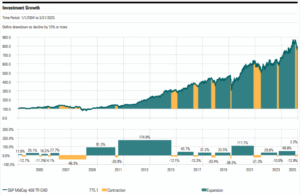
Historically, double digit drawdowns have proven to be good entry points as outsized returns follow. According to a study done by Goldman Sachs, since 1980 buying the S&P 500 after a 10% drop has delivered gains in six months 86% of the time, outside of a recession.
Source: Morningstar
We remain cautious on the market and have maintained a higher than usual cash balance as we look for attractive long-term opportunities to deploy capital. We believe in our tried and tested investment framework - the companies we own typically have a strong balance sheet, attractive cash flow profile, proven management team and are in long term growth industries that allow them to compound earnings over time.
Aman Budhwar, CFA
April 15, 2025