Letter from the CIO
October 2020
Greetings!
This year, unfortunately we at PPFAS will not have a chance to meet many of you in person. Each year we have an in-person meeting for unit holders who want to come across to meet and interact and the same is webcast on YouTube. This year the in-person meeting is not happening due to the COVID situation. However we will have an interaction over the internet. Of course it is not the same thing but we hope to have an interaction which is as engaging as always.
Given the limitations of an online interaction, I have tried to make this letter a very detailed one so that most of the basic questions are cleared upfront.
The number of unique investors with us has increased very significantly over the last year. Hence I think it is important to reiterate some things that long time investors know clearly by now. These points are in the section A below. Experienced investors can skip this section if they want.
A. GENERAL POINTS
Long Term Thinking
Our equity schemes are designed for long term investors.
The name of our flagship scheme is Parag Parikh Long Term Equity Fund (Scheme name has changed to Parag Parikh Flexi Cap Fund as on February, 2021). In case someone still misses the long term part, we reiterate the same in our communication 😊. An example is given below

I have seen some chatter about timing the entry and exit in our fund for very short term horizons. The Long Term Equity Fund is an open ended scheme and we cannot stop people from buying and redeeming our units. However this will result in an exit load for redemption within the first two years of the investment, stamp duty and capital gains taxes. Such actions in my view are not very beneficial to those indulging in such actions.
We are not superheroes and we do not have mythical powers
Just because we have bought a stock does not mean it immediately starts to go up. When we buy, we buy with a longer term outlook usually a minimum of 5 years. The investment thesis takes time to play out.
Last 1 year returns are NOT the norm
Please invest with us because you like the process, the people, the scheme structure and the organisation. Past returns, especially the short term returns are misleading and should not be the reason to invest or not invest.
No strategy works all the time
Even excellent strategies have long periods of under performance. Unless you are clear why you have invested in a particular strategy, you may not have the conviction to see the ups and downs (more likely downs and ups) which are a part of any investment journey. It is very important to stay the course.
Underperforming stocks
We frequently get questions on stocks in the portfolio which have not done well. Firstly, the nature of equity investing is such that not all investments work out perfectly. There are spectacular winners, moderate performers and spectacular losers. What matters is that on a portfolio level we earn decent returns while managing the risk properly.
Sure, we have to continuously examine our mistakes and learn from them. However no amount of diligence will give a 100% strike rate in success in stock picking.
Whether we are successful or unsuccessful is known only over time. Pharma Stocks and Mid Cap IT names in our portfolio which were looking like duds last year suddenly became flavour of the month. At the same time some of the high flying sectors of the past like private sector banks have suddenly lost popularity. There is no magic wand which converts private sector banks into pharma stocks when a pandemic strikes. That is the reason why we have multiple sectors in the portfolio and different stocks do well at different times.
We are patient with both the performing stocks and non performing stocks and typically do not churn the portfolio too much. We also periodically buy under performing stocks (defined as stocks where the stock price has gone nowhere or has come down in the recent past). We invest in businesses based on their fundamental characteristics rather that just take stock price signals.
Tail Risk
An interesting question came to the fore in March and April of this year. What if we go into a deep depression like the one that was seen in the USA in the late 1920s and early 30s? Will the equity investments with PPFAS be safe?
It is important to realise that in the last 40 years, numerous events have happened in India and in the world. The Global Financial Crisis in 2008, two Gulf wars, a balance of payments crisis in India and big devaluation of the Indian Rupee in the early '90s, assassination of a prime minister and an ex-prime minister, terrorism attacks including 9/11, economic sanctions on India post nuclear tests, Kargil war and numerous border tensions, sectarian riots, civil unrest, political instability including minority governments and short lived governments.
While the current crisis may seem uniquely tough, the country and the world periodically go through difficult situations. One has to witness the ups and downs of the economy, businesses, stock markets and the portfolio NAVs.
The only protection to an extent against these ups and downs can come from asset allocation appropriate to the circumstances and the risk tolerance ability of the investor. Even asset allocation may not fully protect against tail risks. One may be tempted to think that Americans who did not participate in the stock markets but instead put all their money in bank deposits in 1929 would have been protected. However there were an estimated 9,000 banks which failed (there was no deposit insurance at that time) and by 1933 bank depositors had lost an estimated $ 140 billion on account of bank failures.
Hence, the answer to the question is
- Firstly, do not put short term money in equities. Equities usually recover after a crisis like situation.
- Secondly, have an appropriate asset allocation across various asset classes like bank deposits, government savings schemes, retirement funds, equity and debt mutual funds, real estate and so on.
- An equity fund will lose value if the underlying businesses lose value.
B. INVESTMENT PROCESS
Equities
- Our research team is structured on sectoral lines. Each analyst covers the allocated sectors and the companies in that sector both in India and outside.
- We have a defined coverage universe. We apply quantitative filters based on leverage, return on equity, market cap and so on. We only cover companies which meet our criteria.
- We invest in companies from our coverage universe. We are neither too concentrated nor excessively diversified. Typically we invest in around 25 companies.
- Management and promoter quality is very important. We will not knowingly invest with management which has a dubious track record.
- We invest in companies with low leverage and a proven track record of running a business with high return on capital and equity.
- We are mindful of the valuations we pay for the business.
- The investment process for the Long Term Equity Fund (LTEF) and the Tax Saver Fund (TSF) is the same. However there are some differences in the portfolio construct based on the following
- The LTEF can invest in foreign stocks up to 35%, the TSF can invest in only Indian stocks
- The minimum weightage to Indian stocks is 65% in LTEF. It is 80% in TSF.
- Derivatives can be used in LTEF whereas they cannot be used in TSF.
Liquid Fund
The primary objective of our liquid fund is to have a safe place to park short term funds and to enable Systematic Transfer Plans for our equity funds. In the current environment where there could be elevated stress on corporate liquidity, we are only investing in sovereign debt and overnight money market deployment.
At other times as well, the exposure to corporate debt and bank CDs is small and the fund is largely in sovereign papers. We keep exposures per issuer small and do our own credit analysis.
C. INVESTMENT OUTLOOK
We are taking the current COVID situation in stride. As mentioned earlier, ups and downs are a part of any investment journey.
We are taking the current COVID situation in stride. As mentioned earlier, ups and downs are a part of any investment journey.
Our objective is to:
- Identify businesses that have superior attributes in terms of management quality, return on investment characteristics of the business, growth prospects, low leverage and so on.
- Be mindful of the valuations at which we buy these businesses and not to overpay for quality businesses.
US Technology companies / Platforms
The COVID related lock-downs have accelerated some of the underlying trends in the environment which favour these companies.
Some of them are
- Shift towards digital advertising
- Shift towards cloud computing
- Preference for e-commerce versus physical stores
- Consumption of streaming music and video content as opposed to traditional radio and television.
- Investments in technology to enable remote work, video calls, collaboration tools etc.
The businesses we own are strong and have been gaining traction in the pandemic. The stock prices have also run up. We are mindful of the valuations and will not ignore this aspect in our investments.
Borrowing / Lending businesses
In the current COVID situation, the emphasis on low leverage is enhanced. Typically we do not invest in companies with high leverage but banks and NBFCs by the very nature of their business use leverage significantly. We have reduced the portfolio weights of such businesses in recent months. While the private sector banks and other quality lenders will gain market share in this crisis and will see improved margins in the longer run, in the short to medium term there may be elevated levels of NPAs / bad loans and hence our conservative stance.
Non Lending Businesses / Platforms
Depositories, Commodity and Power Exchanges, Rating Agencies, Life and General Insurance Companies etc. should be relatively immune to the troubles of the lending based financial companies and this is where we have increased allocations for fresh investments.
Pharma companies
Pharma companies have been doing well recently after the regulatory troubles a few years back. As before, we are invested in a basket of generic pharma companies with relatively small weights per company as a consequence of which the risk to an individual company, plant or molecule is small.
IT Services
IT Services companies in our portfolio have been broadly less affected than others because the nature of work is easily amenable to Work From Home. Further, there may be increased demand in certain areas to accelerate the digital transformation of traditional companies.
Both Pharma and IT services will also benefit from the weaker rupee.
FMCG
FMCG companies are very resilient in this environment. We have largely stayed away from large investments here given the very elevated valuations of most companies. We have increased investments in this space in recent months where we found opportunities at a reasonable valuation.
Automobiles
We own some auto companies. The auto sector had been undergoing a cyclical slowdown pre-COVID. Given the current emphasis on social distancing and the consumer preference for personal mobility instead of public transport or shared mobility, we could see some demand revival in this space.
Economy and Valuations
There is a lot of surprise at the headline GDP numbers and the rise in stock prices. The key point to note is that markets are inherently forward looking. The fall in stock prices in March and April happened before the fall in GDP was reported. The rise in stock prices is in anticipation of economic recovery.
A lot of fiscal and monetary measures have been implemented across the world. We are likely to be in an environment of low interest rates for many years. Given the sustained fall in the cost of capital, some amount of increase in valuation is to be expected.
While we are mindful of the environment our investments are largely driven by individual companies rather than an overall macro view.
Polarisation
A lot has been made of the stock indices being driven up due to the rise in stock prices of a few companies. It should be noted that there is to some extent polarisation in profits as well. While some anti trust measures and some measures to help small businesses will be announced, it should not be too much of a surprise to see a handful of companies in some sector succeeding and the rest barely managing to survive.
D. MISCELLANEOUS MATTERS
A lot of time has been spent on the new circular by SEBI on Multi Cap Funds and on the Long Term Equity Fund being able to write covered call options. Both of these are non issues in my view and have been addressed separately in our communication. We will briefly mention these at our AGM but not spend a lot of time discussing these.
I look forward to interacting with you all on October 24th.
With Warm Regards,
Rajeev Thakkar
Chief Investment Officer
PPFAS Mutual Fund
Date: October 2020
Parag Parikh Flexi Cap Fund
This product is suitable for investors who are seeking*
The investment objective of the Scheme is to seek to generate long-term capital growth from an actively managed portfolio primarily of Equity and Equity Related Securities. Scheme shall invest in Indian equities, foreign equities and related instruments and debt securities. |

|
*Investors should consult their financial advisers if in doubt about whether the product is suitable for them.
Download SID/SAI and KIM here.
|
|
Parag Parikh Liquid Fund
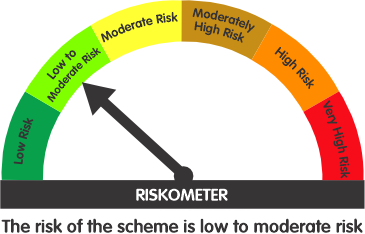
This product is suitable for investors who are seeking*
- Income over short term
- Investments in Debt/money market instruments
|
|
*Investors should consult their financial advisers if in doubt about whether the product is suitable for them.
Download SID/SAI and KIM here.
|
|
Parag Parikh ELSS Tax Saver Fund
This product is suitable for investors who are seeking*
- Long term capital appreciation
- Investment predominantly in equity and equity related securities.
|
|
*Investors should consult their financial advisers if in doubt about whether the product is suitable for them.
Download SID/SAI and KIM here.
Mutual Fund investments are subject to market risks, read all scheme related documents carefully.
|
|